Newly appointed members will soon convene for their first meeting, select a community representative and begin comprehensive review of Public Land Trust lands, revenues and accounting practices
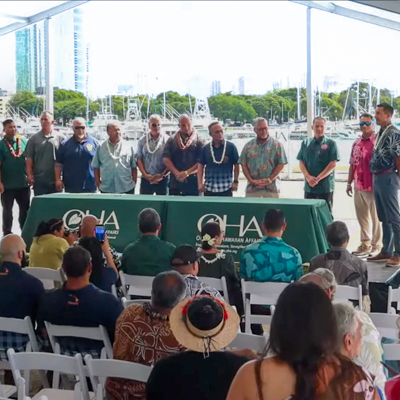
HONOLULU (Nov. 4, 2026) — The Office of Hawaiian Affairs (OHA) today announced the formation of the newly constituted Public Land Trust Working Group, bringing together representatives of OHA, the Governor’s Office and the Hawaiʻi State Legislature to address longstanding questions surrounding the inventory, accounting and distribution of revenues generated by Hawaiʻi’s Public Land Trust.
With appointments now completed by OHA, Gov. Josh Green, Senate President Ronald Kouchi and House Speaker Nadine Nakamura, the working group is expected to convene for its first meeting in the coming weeks. Among its initial responsibilities will be selecting a non-governmental community member to complete the group’s membership and establishing a framework and schedule for its work.
The working group was originally established under Act 226, Session Laws of Hawaiʻi 2022, and its membership and responsibilities were expanded under Act 32, Session Laws of Hawaiʻi 2026 (Senate Bill 903).
The group’s central mission is to ensure a complete and accurate accounting of Public Land Trust lands and revenues and determine the 20% pro rata share of income and proceeds due annually to OHA for the betterment of the conditions of Native Hawaiians.
“This is an important opportunity to address an issue that has remained unresolved for decades,” said OHA Board Chair Kaialiʻi Kahele. “The Public Land Trust represents a fundamental obligation of the State to the Native Hawaiian people. We now have an opportunity to bring together the necessary expertise, examine the facts, establish an accurate accounting and work toward a fair and lasting resolution. Our beneficiaries deserve some meaningful progress.”
The following individuals have been appointed to serve on the working group:
The Public Land Trust includes former crown and government lands of the Hawaiian Kingdom that were transferred to the United States following annexation and subsequently placed under the State’s public trust obligations through the Hawaiʻi Admission Act of 1959.
The Hawaiʻi State Constitution recognizes Native Hawaiians as beneficiaries of the public land trust and establishes OHA’s responsibility to manage its designated share of trust income and proceeds for their benefit.
Although the State currently transfers $21.5 million annually to OHA as an interim amount, the full 20% share of Public Land Trust revenues remains unresolved.
The working group is charged with reviewing the accuracy and completeness of the Public Land Trust land inventory, examining how state agencies account for and report trust revenues, identifying deficiencies in existing reporting systems and recommending improvements.
Its responsibilities also include developing recommendations for a comprehensive reconciliation framework between OHA and the State, including methodologies for calculating amounts associated with Public Land Trust revenue claims dating back to July 1, 2012.
“This work is about much more than accounting for land and revenues,” Kahele said. “It is about fulfilling a trust responsibility and ensuring that resources intended to benefit Native Hawaiians are properly identified, accounted for and made available to support the well-being and future of our lāhui. We are committed to approaching this process with diligence, collaboration and a clear sense of kuleana.”
Under Act 32, the working group must submit a series of reports to the Hawaiʻi State Legislature:
OHA is also required to submit its findings and considerations regarding the proposed reconciliation framework to the Legislature by Dec. 31, 2028.
“After decades of uncertainty, this working group has a responsibility to move beyond discussion and toward substantive results,” Kahele said. “We look forward to working with our partners in state government and the community to advance a process that honors the State’s obligations and protects the interests of Native Hawaiian beneficiaries.”