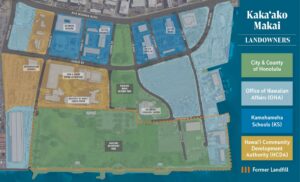
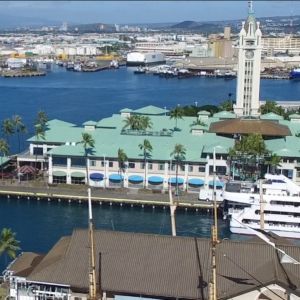
In 2012, OHA accepted 29 acres in Kaka‘ako Ma Kai, valued at $200 million dollars, to settle a debt the State owed the Native Hawaiian community for unpaid public land trust revenue. OHA is a semi-autonomous state agency established by the Hawaiʻi Constitution and charged with advancing the well-being of the Native Hawaiian community. Like any landowner operating within the law, OHA has both the authority and the responsibility to determine how its lands can best fulfill their purpose. OHA carries a fiduciary obligation to steward these lands responsibly and productively for its beneficiaries and for Hawaiʻi as a whole.
Nearly two decades ago, the Hawaiʻi State Legislature imposed a residential moratorium in Kakaʻako Ma Kai at a time when proposals centered on luxury condominiums aimed largely at out-of-state buyers rather than housing for local families. That moratorium prohibited all residential opportunities in the area.
Today, almost 20 years later, OHA’s nine parcels remain largely underutilized. The moratorium is still in place even as Hawaiʻi faces a severe housing shortage while public infrastructure already built to support this area sits underleveraged. OHA and its beneficiaries continue to call for revitalization that reflects both cultural stewardship and meaningful public return.
View OHA & environmental expertsʻ efforts to assess and address environmental concerns, revitalize properties, and explore opportunities for housing and sustainable development.
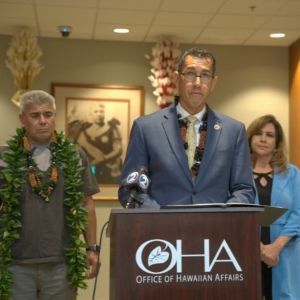
View the historic partnership agreement signing between OHA & DHHL at “He Kuleana Lōkahi – A Shared Responsibility | Partnership Agreement Signing”
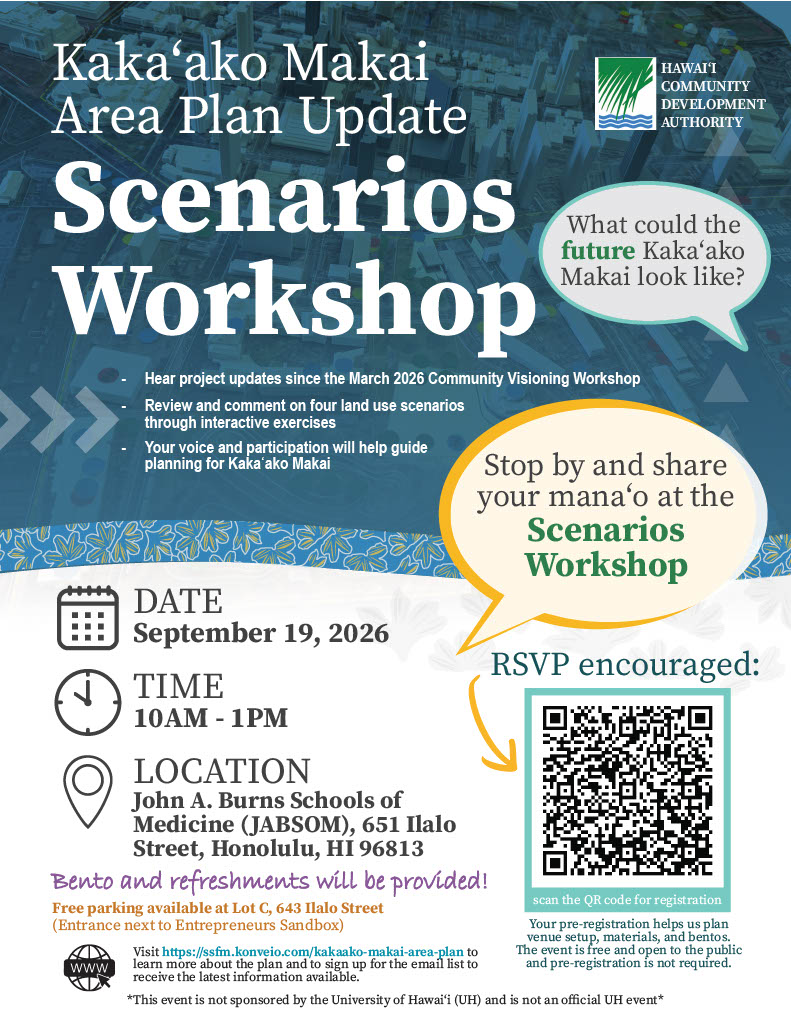
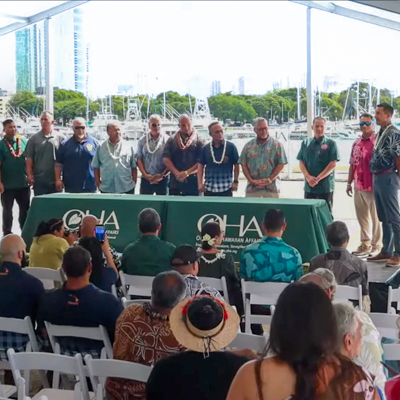
View the September 19, 2026 Kakaʻako Ma Kai HCDA Scenarios Workshop
Kakaʻako Ma Kai Scenarios Workshop
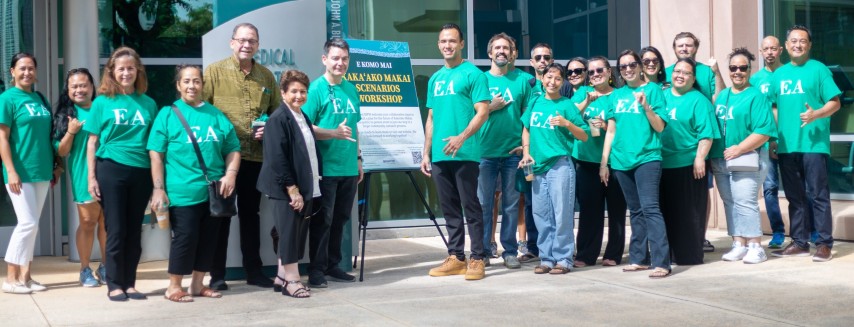
On September 19th, the Hawaii Community Development Authority (HCDA) held a workshop to consider whether to lift a longstanding residential ban as part of its “scenarios workshop” at the UH JABSOM campus.
HCDA Community Planning for Kakaʻako Ma Kai
Pursuant to its statutory mandate, HCDA has been leading a planning process for Kakaʻako Ma Kai as part of a regular “update” of its community plan for the area.
During HCDA’s workshop in March, community participants identified several priorities aligned with OHA’s vision for the area:
increasing opportunities for local housing,
establishing a Native Hawaiian Cultural Center,
protecting ocean access, and
keeping sustainability at the heart of future planning.
These community priorities from HCDA’s planning workshops reflect OHA’s goals to balance cultural revitalization, housing, public access, environmental responsibility, and long-term benefit for the lāhui. OHA has been actively participating in the HCDA process and remains committed to ensuring Native Hawaiian voices, beneficiary interests, and community priorities are represented in these important discussions.
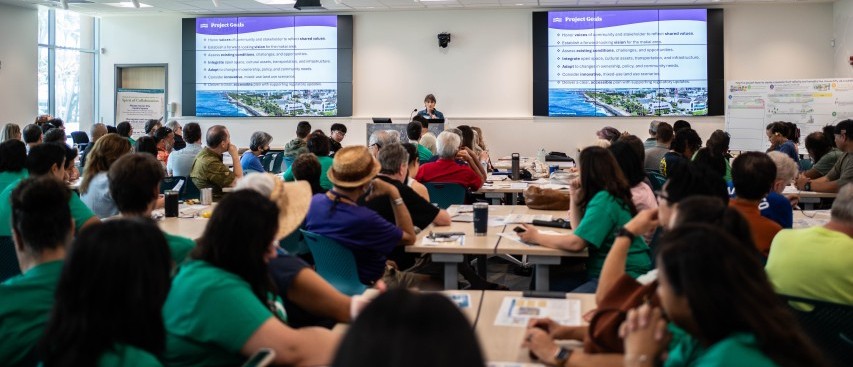
OHA staff at HCDA Kakaʻako Ma Kai Workshop
The public will have an opportunity to review and comment on four land use scenarios for Kakaʻako Ma Kai through interactive exercises. HCDA has emphasized that community participation will help guide planning for the area.
This is an important opportunity for the community to make its voice heard on the future of Kakaʻako Ma Kai, including the question of whether residential uses should be allowed.
We encourage beneficiaries and community members to learn about the scenarios and provide manaʻo directly to HCDA as it considers its next steps.
Planning for a Native Hawaiian Cultural Center continues to move forward.
A feasibility study is underway to answer important questions about the project’s long-term vision, operations, programming, financial sustainability, and overall community benefits before design and construction begin. This work builds on years of engagement with beneficiaries, cultural practitioners, community organizations, educators, and other stakeholders.
The proposed Native Hawaiian Cultural Center is envisioned not as a building or visitor destination, but as a living place of Native Hawaiian identity, language, arts, cultural practice, education, intergenerational learning, and community connection. It is intended to restore connection—to place, to culture, and to one another—while remaining culturally grounded and operationally sustainable.
A presentation on the feasibility study will be made to the OHA Board of Trustees on September 9, 2026. We encourage you to share your feedback as we take the next steps in the long journey toward making the Native Hawaiian Cultural Center a reality.
2026 Environmental Assessment & Land Stewardship Facts
What Are the Geological Features of This Area?
Mostly Reclaimed Coastal Property.
OHA’s Kaka‘ako Ma Kai properties are not incinerator ash landfill like Kaka‘ako Waterfront Park was before it was developed. The land OHA owns was formed through coastal reclamation and decades of harbor and industrial use—not municipal waste disposal. This includes dredged material, coral, rock, and construction fill used to create usable land over time.
Historical records show the area was used for:
Warehouses
Fishing operations
Boatyards
Fueling stations
Government facilities
The environmental conditions reflect this rich urban history and are similar to other areas in Honolulu that have already been safely redeveloped.
Isn’t this area an old landfill?
The former municipal landfill is buried beneath the 35-acre Kakaʻako Waterfront Park’s landscaped, rolling green hills. This area is owned and managed by City & County of Honolulu and lies between Kewalo Basin and the Point Panic area, south of ʻŌlomehani Street. North of ʻŌlomehani Street: OHA’s parcels are primarily reclaimed and industrial land.
OHA’s parcels are not the landfill itself. Nonetheless, OHA secured a $2 million dollar EPA Brownfields Assessment Grant to conduct additional environmental review. Responsible revitalization of Kaka‘ako Makai requires thorough environmental assessment and mitigation. The findings will guide next steps in coordination with the Department of Health.
No. Only a portion of the area, mainly south of ʻŌlomehani Street, was used as landfill. Most OHA parcels are on reclaimed and industrial land—not landfill.
Why do people think it is all landfill?
This confusion comes from Kaka‘ako Waterfront Park, which is built on a former landfill. That park is owned by the City, and its conditions are often incorrectly applied to the entire area. The park is considered safe and families and the public use and enjoy the park.
Is the land being checked for safety?
Yes. OHA is conducting detailed environmental testing on all parcels using federal funding, with oversight from the state Department of Health.
Does landfill mean the land cannot be developed?
No. Land with past industrial use or landfill conditions can be safely developed when proper environmental controls are in place and the state gives its approval.
Has this already been done in this area?
Yes. Parcel D, where the popular 53 By the Sea restaurant is located, is on landfill-affected land. It was reviewed and approved by the Department of Health and is operating today.
Could contamination affect people or the ocean?
Studies have shown no significant impacts to the near-shore ocean environment. Groundwater in this area is naturally salty and not used for drinking, which reduces risk. Ongoing testing is mapping conditions to ensure safety.
Does land use planning mean construction is starting soon?
No. Environmental testing and State approval must happen after any land use planning. No development can proceed without meeting strict health and safety standards.
Has land like this been developed elsewhere in Honolulu?
Yes. Many areas in Kaka‘ako and Honolulu with similar conditions have been cleaned up and safely developed with proper oversight. Examples:
Symphony Honolulu (Former industrial site in Kaka‘ako)
Alia 888 Ala Moana (Former industrial site in Kaka‘ako)
Iwilei Center (Former industrial site in Kaka‘ako)
Capital Place (Former industrial site in Kaka‘ako)
John A. Burns School of Medicine – University of Hawai‘i (Kaka‘ako, built immediately adjacent to OHA’s parcels on the same type of reclaimed coastal and industrial fill)
2026 Kakaʻako Ma Kai FAQs
OHA had a choice to either accept or decline the Kakaʻako Ma Kai lands at the time of the 2012 settlement. Knowing that residential use was prohibited at that time, why did OHA choose to accept the settlement agreement?
The 2012 settlement resolved a long-standing debt owed to the Native Hawaiian community for unpaid public land trust revenues. The 29 acres in Kakaʻako Ma Kai were conveyed as part of that resolution. These lands are Native Hawaiian trust lands and accepting them ensured they would remain in the hands of an entity constitutionally charged with advancing the well-being of the lāhui. Declining the lands would not have advanced the interests of Native Hawaiians. Stewarding them does.
At the time, there was a clear understanding that the residential moratorium could be revisited. Then Governor Neil Abercrombie publicly committed to working with OHA to lift the prohibition so housing could be developed. Although that effort did not move forward after the change in administration, the long-term value of the land and its strategic location within an urban core supported by infrastructure made acceptance the responsible choice.
Does OHA have a master plan?
OHA has studied its lands extensively but has not adopted a master plan under the current restrictions. A responsible master plan must be grounded in feasible land uses.
Once residential and other mixed uses are restored, OHA will advance a comprehensive plan that balances housing, cultural space, economic sustainability, and public access.
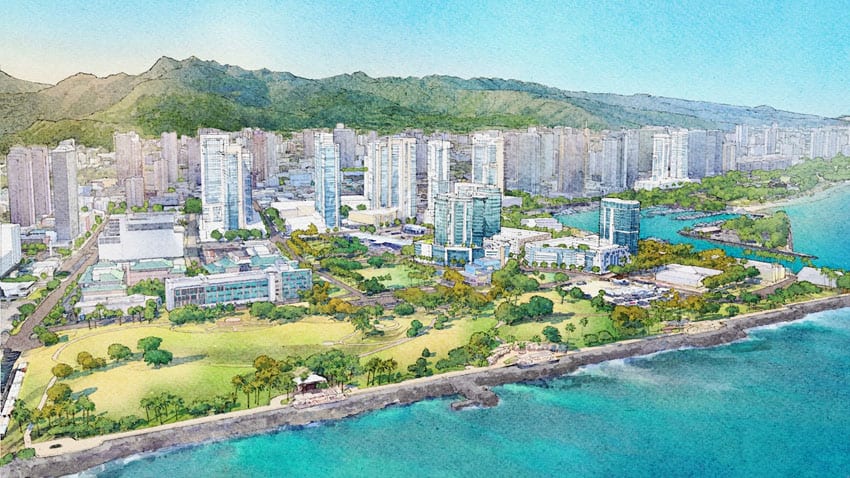
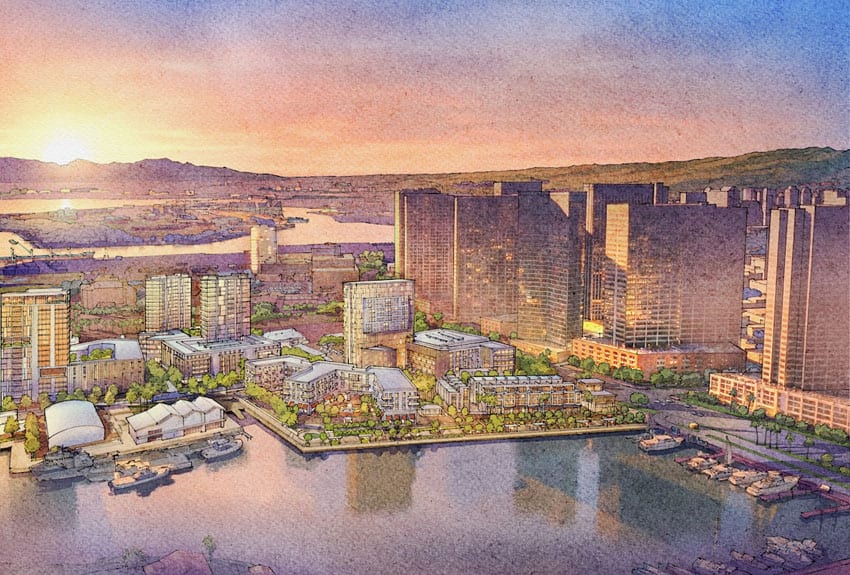
Conceptual drawing of aerial view at sunset
How will OHA move forward in transforming these lands?
For nearly two decades, the residential moratorium and rigid allowable uses have limited the financial feasibility of meaningful development. As a result, the lands have remained underutilized despite being located in one of the most infrastructure rich urban districts in the state.
OHA is working through the Hawaiʻi Community Development Authority (HCDA) planning process to modernize the land use framework so these parcels can support a mixed-use community that includes housing, cultural space, and public amenities. With updated entitlements, OHA envisions a community that celebrates Native Hawaiian culture while addressing broader concerns such as environmental remediation, shoreline access, and long-term resilience.
How does OHA plan to overturn the residential moratorium?
The Kakaʻako Ma Kai lands that OHA owns are governed by the Hawaiʻi Community Development Authority (HCDA), the state redevelopment agency created in 1976 to revitalize underused urban areas, expand housing in the urban core, reduce suburban sprawl, and preserve agricultural lands through coordinated statewide planning.
Public infrastructure investments by all Kaka‘ako landowners were made to support residential growth in this district. The HCDA process is the proper forum to ensure those investments produce measurable public return.
Any change will occur through a transparent public process that HCDA oversees.
Will OHA provide affordable housing for Native Hawaiians?
HCDA already requires affordable housing set asides for residential development in the district. If residential uses are restored, OHA intends to provide mixed-use community options, designed for local families and working residents.
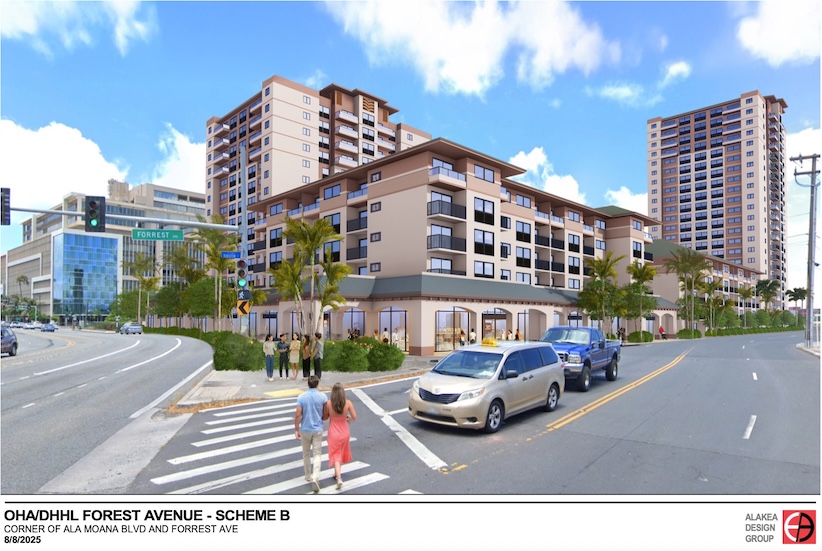
OHA’s Board of Trustees is in discussion with the Department of Hawaiian Home Lands (DHHL) regarding potential development of Lot I, which flanks the Ala Moana corridor. That project would serve beneficiaries of both agencies and reflects OHA’s commitment to partnership where it advances trust purposes.
How would DHHL provide housing on OHA’s Kaka‘ako Ma Kai lands?
DHHL has independent authority under state law to develop housing for its beneficiaries. Discussions regarding partnership reflect a shared goal of expanding housing opportunity for Native Hawaiians in the urban core.
Any partnership would comply with applicable law and align with OHA’s fiduciary obligations.
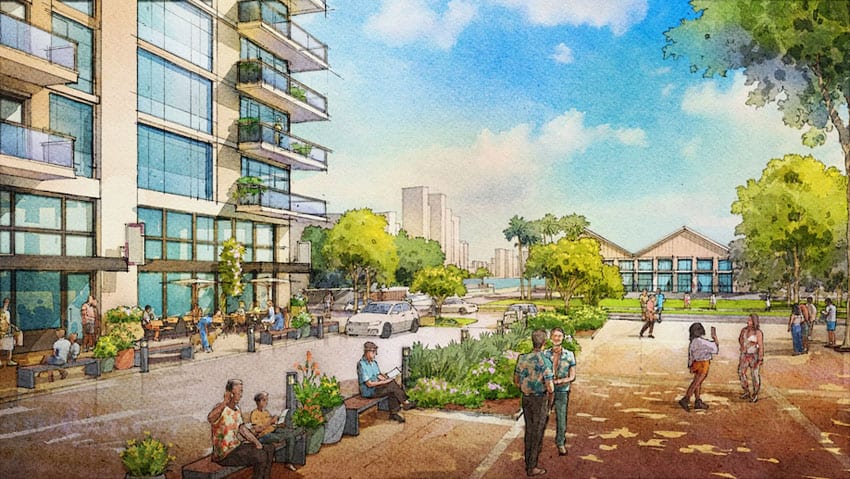
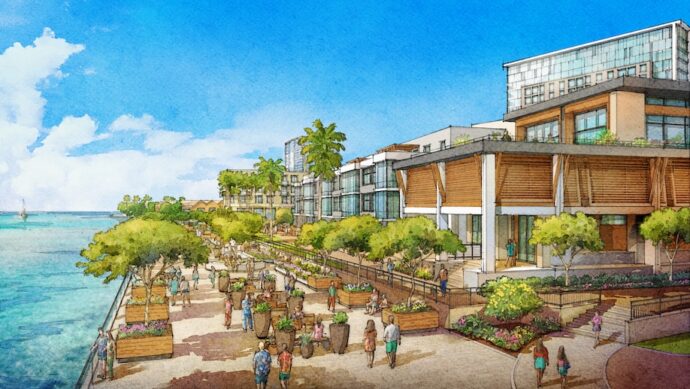
Conceptual drawing of outdoor walking areas
Will development block ocean views?
Any development must comply with HCDA height limits and Federal Aviation Administration requirements, which cap height at 200 feet. That limit is substantially lower than heights permitted on the mauka side of Ala Moana Boulevard. View impacts will be evaluated through the HCDA planning process.
Will shoreline access remain public?
Nearly 68 acres of Kakaʻako Ma Kai are publicly owned parks and open space managed by the City and County of Honolulu. OHA does not own shoreline parcels and supports preserving and enhancing public access.
What about traffic and parking?
OHA owns 29 of approximately 170 acres that comprise Kakaʻako Ma Kai. The majority of the land in the area remains public park space or state and city owned parcels.
Kakaʻako Ma Kai’s location near Downtown Honolulu, Ala Moana, and Waikīkī makes it one of the few areas where thoughtful mixed-use community revitalization near employment centers can help reduce commute distances.
Any development must meet HCDA parking requirements and applicable transportation standards.
We do not want more people in Kakaʻako Ma Kai. It is already crowded.
Kakaʻako already contains the infrastructure, parks, transit access, and employment base needed to support a vibrant mixed-use district.
Compared to the mauka side of Kakaʻako, density in Kakaʻako Ma Kai remains significantly lower. Thoughtful and responsible activation can improve safety, increase activity and “eyes on the street,” and enhance public spaces while maintaining access to and enjoyment of the shoreline.
As the constitutionally established advocate for Native Hawaiians, OHA believes strengthening Hawaiʻi means building in areas already supported by infrastructure, jobs, and services rather than pushing families farther away from opportunity and deeper into rural lands.
Share Your Manaʻo on the Future of Kakaʻako Ma Kai!
The latest public comment period closed on April 7, 2026 – Results will be shared in the near future as well as future opportunities to share manaʻo.
The Hawaiʻi Community Development Authority (HCDA) has begun updating the Kakaʻako Ma Kai Area Plan, which will guide the future of the shoreline area between Downtown Honolulu and Ala Moana. This planning process will help determine how the area is used in the years ahead, including parks, cultural spaces, shoreline access, and other community uses. As HCDA updates the area plan, beneficiary perspectives are an important part of the conversation. Hearing directly from the Native Hawaiian community helps ensure that decisions about the future of this area reflect the values and interests of those the trust was established to serve.
Mahalo for taking the time to share your thoughts and for helping ensure Native Hawaiian perspectives are part of this important planning process.