• Facebook
  • Twitter
  • YouTube
  • Vimeo
  • Instagram
OHA: Office of Hawaiian Affairs

With community input, OHA has developed its Mana i Mauli Ola Strategic Plan that will guide the organization’s efforts forward over the next 15-years. In this 25-minute Mana i Mauli Ola film, OHA leadership along with community leaders share mana’o on using traditional strengths of ‘ohana, mo'omeheu and ‘āina to create greater wellbeing in the areas of education, health, housing and economic stability. Watch the Mana i Mauli Ola film for insights on OHA's future direction.

Mana i Mauli Ola

OHA’s Strategic Plan “Mana i Mauli Ola” (Strength to Wellbeing) includes three foundations: ‘ohana (family), mo‘omeheu (culture), and ‘āina (land and water). OHA recognizes these foundations have the power to affect the wellbeing of Native Hawaiians. Therefore, they are woven into OHA’s plans to affect change in the areas of education, health, housing, and economics. These four directions will be used to guide OHA’s work to better the conditions of Native Hawaiians. Over the next 15 years, OHA will be implementing strategies, aligned with our foundations and directions to achieve our envisioned outcomes for a thriving and abundant lāhui.

Revised 2026: Revisions approved by the OHA Board of Trustees on June 25, 2026.

Mana i Mauli Ola Strategic Plan

Strategic Direction: Educational Pathways

Supporting initiatives, leveraging partnerships, engaging in strategies to develop educational pathways that strengthen culture-based education, early education, K-12 and post-secondary education will ensure that Native Hawaiians are grounded in their past while participating in a technologically oriented future.

Directional Outcome: Strengthened and integrated community, culture-based learning systems.

Strategy 1: Support development and use of educational resources for all Hawaiian lifelong learners in schools, communities and ‘ohana.

In the time before, our kūpuna had no written language. The ‘ike and mo‘olelo of our people were passed from one generation to the next through oli and hula. Palapalai was one of the plants kapu to Laka, the goddess of hula. Palapa-lai is often worn by dancers or used to adorn the hula kuahu (altar). Because of this connection, it has been chosen to represent culture.

Strategic Outcomes:

  • 1.1. Increase number or percent of Native Hawaiian students who enter educational systems ready to learn;
  • 1.2. Increase number or percent of Native Hawaiian students graduating high school who are college, career, and community ready;
  • 1.3. Increase number of Native Hawaiians engaged in traditional learning systems (e.g., hale, hālau, mua, hale pe‘a) that re-establish/maintain strong cultural foundations and identity;
  • 1.4. Increase number, reach, and/or accessibility of Native Hawaiian knowledge sources, and media productions, resources (print, broadcast, radio, and digital) grounded in Hawaiian worldview, including OHAʻs flagship digital resources: Papakilo, Kīpuka, Native Hawaiian Databook; and
  • 1.5 Increase the number of Native Hawaiian leaders completing leadership development, good governance training, government transparency, and/or capacity-building programs, and track their placement and advancement into leadership roles across sectors. 

Strategy 2: Support education through Hawaiian language medium and focused Charter Schools.

Strategic Outcomes:

  • 2.1. Adequately resourced Hawaiian Focused Charter Schools and Hawaiian medium schools, including funding of transportation, special education, facilities, and meals, and availability of qualified teachers;
  • 2.2. Increased availability of Hawaiian Focused Charter Schools and Hawaiian medium schools; and
  • 2.3. Establishment of a Native Hawaiian Charter School and Hawaiian-medium system.
Strategic Direction: Health Outcomes

Supporting initiatives, leveraging partnerships, engaging in strategies to promote healthy and strong families.

Directional Outcome: Strengthened ‘ōiwi (cultural identity), ea (self-governance), ‘āina momona (healthy lands and people), pilina (relationships), waiwai (shared wealth), ke akua mana (spirituality).

Strategy 3: Advance policies, programs, and practices that strengthen Hawaiian wellbeing, including physical, spiritual, mental, and emotional health.

Strategic Outcomes:

  • 3.1. Increase availability of and access to quality, culturally based, and culturally adapted prevention and treatment interventions in ‘ohana, schools, and communities; (E Ola Mau a Mau);
  • 3.2. Establish a fully functional, high-quality, culturally adapted, primary Native Hawaiian Health System which coordinates effective wellness activities/programs; (E Ola Mau a Mau);
  • 3.3. Decrease the number / percent of Native Hawaiians in jails and prison; and
  • 3.4. Increase the number of cases, sites, and processes in which Native Hawaiian burial protection laws (including HRS 6E) are effectively implemented and increase the capacity and resourcing of Island Burial Councils.

Strategy 4: Advance policies, programs and practices that strengthen the health of the ‘āina and mo‘omeheu.

Strategic Outcomes:

  • 4.1. Preservation and perpetuation of Hawaiian language, culture, traditions, identity, and sense of lāhui;
  • 4.2. Increase Native Hawaiian stewardship and protection of Hawai‘i’s natural resources, cultural sites (wahi pana), and protected areas, including Papahānaumokuākea, that foster connection to ‘āina, ‘ohana, and communities;
  • 4.3. Increase restoration of Native Hawaiian cultural sites, landscapes, kulāiwi and traditional food systems;
  • 4.4. Increase the number of formal engagements, partnerships, and representation of Native Hawaiians in international arenas and collaborative initiatives with Pacific Island nations and Indigenous communities;
  • 4.5. Increase Native Hawaiian voter participation rates and the number and proportion of Native Hawaiians serving in decision-making roles across federal, state, and county government bodies; and
  • 4.6. Establish and increase the number of Native Hawaiian data governance policies, agreements, and datasets that are owned, managed, or controlled by Native Hawaiian entities to supportdecision-making and self-determination.
Strategic Direction: Quality Housing

Leveraging partnerships to ensure Native Hawaiians can obtain affordable rentals as well as homeownership while also engaging in opportunities to affect legislation that support Hawaiian Home Lands, overall housing costs, and housing supply will greatly enhance the ability for Native Hawaiians who so desire to remain in Hawaiʻi.

Directional Outcome: Strengthened capability for ‘ohana to meet living needs, including stable and affordable housing, through effective implementation of the Hawaiian Homes Commission Act and advancement of aligned housing policies, programs, and partnerships.

Strategy 5: Strategically deploy financial, land, and programmatic resources to improve outcomes for Native Hawaiian communities. This
includes stewarding strategic investment alignment, program investments, and partnering with public, private, and community organizations to advance initiatives that strengthen housing stability, economic opportunity, education, and wellbeing.

Strategic Outcomes:

  • 5.1. Increase the number and percentage of Native
    Hawaiian households able to access and maintain
    stable, safe, and affordable rental housing through
    policy advocacy, strategic investment alignment,
    and partnerships supported by OHA;
  • 5.2. Increase the number and percentage of Native
    Hawaiian ‘ohana achieving sustainable homeownership through aligned housing policies, programs,
    financing tools, policy advocacy, and strategic
    partnerships supported by OHA that reduce
    strategic and systemic barriers to housing stability;
    and
  • 5.3. Strengthen statewide housing systems that support Native Hawaiian ʻohana by advancing policies, cross-sector partnerships, and institutional changes that expand equitable housing pathways and reduce systemic barriers to long-term housing stability.

Strategy 6: Support and advance implementation of the Hawaiian Homes Commission Act and aligned housing initiatives through land activation, infrastructure coordination, policy advocacy, and increased housing production benefiting Native Hawaiian ʻohana.

Strategic Outcomes:

  • 6.1. Increase affordable non-traditional housing options (e.g., accessory dwelling units/tiny houses, large multi-generational lots, or homes) in communities of ‘ohana’s choice;
  • 6.2. Increase housing opportunities (or pathways) on Hawaiian Home Lands in partnership with the Department of Hawaiian Home Lands through policy advocacy, infrastructure coordination, strategic investments, and strategic partnerships that advance implementation of the Hawaiian Homes Commission Act.;
  • 6.3. Statewide Housing Supply Alignment: Strengthen statewide housing supply benefiting Native Hawaiian households, including those not residing on Hawaiian Home Lands, through policy leadership, funding alignment, and strategic partnerships that support housing production across state and county systems.; and
  • 6.4 Decrease the number or percent of Native Hawaiian ʻohana experiencing housing instability or displacement due to housing affordability constraints, and reduce housing-driven displacement through policies, funding alignment, and strategic partnerships that address affordability and housing supply.
Strategic Direction: Economic Stability

Engaging in strategies to enhance the economic development and financial empowerment of the lāhui will ensure that Native Hawaiians progress toward a state of economic stability.

Directional Outcome: Strengthened economic capability and resilience for ‘ohana, Native Hawaiian communities, and Hawaiian-owned businesses to build and sustain generational wealth and economic systems that are regenerative, sustainable, and reflective of ‘ike kūpuna.

Strategy 7: Advance policies, programs, and practices that strengthen ‘ohana’s ability to pursue multiple pathways toward economic stability.

Strategic Outcomes:

  • 7.1. Increase number/percent of Native Hawaiian ‘ohana who are able to provide high-quality keiki and kūpuna care;
  • 7.2. Increase access to capital and credit for community strengthening Native Hawaiian businesses and individuals; 
  • 7.3. Increase number of Native Hawaiian ‘ohana who are resource stable (e.g., financial, subsistence, other); and 
  • 7.4. Increase Native Hawaiian employment rate.

Strategy 8: Cultivate economic development in and for Hawaiian communities.

Strategic Outcomes:

  • 8.1. Increase the number of successful, community strengthening Native Hawaiian-owned businesses;
  • 8.2. Establish new markets for Native Hawaiian products (e.g., kalo, loko i‘a grown fish) that can provide Native Hawaiian producers a livable wage; and
  • 8.3. Establish and operationalize an Indigenous economic system consistent with Native Hawaiian knowledge, culture, values, and practices

Past Strategic Plans

LATEST NEWS

More

OHA Announces Three Finalists for Administrator/CEO Position

More
PTA thumb

OHA documentary Held in Trust examines history and future of Hawaiʻi’s military-leased public lands

More
MiMO square thumb

OHA Board Adopts Strategic Plan Update to Strengthen Mana i Mauli Ola

More
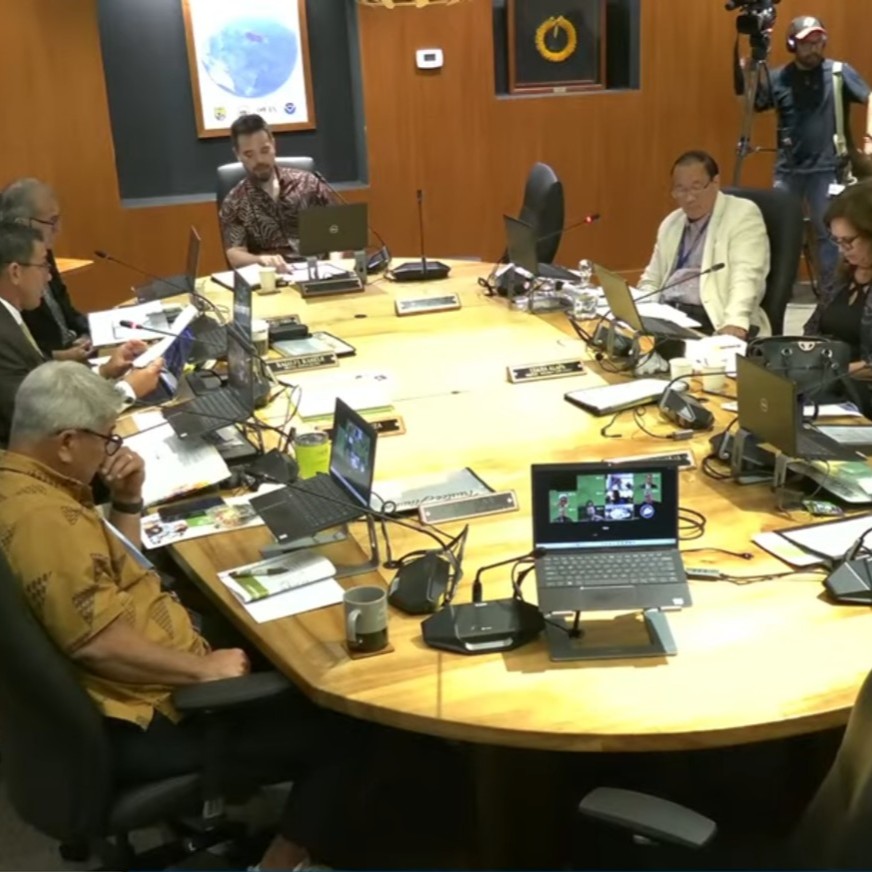
Photo: Board of Trustees Meeting

OHA Board Authorizes More Than $360,000 in Emergency Relief for Native Hawaiians Impacted by Hurricane Lowell

More
Kakaʻako Makai square

OHA, City Begin Discussions on Shared Public Vision for Kakaʻako Look Lab Site

More